java并发编程学习之FutureTask
FutureTask
在 java并发编程学习之三种线程启动方式 中有提过。主要的方法如下:
- cancel(boolean mayInterruptIfRunning):取消任务的执行失败,返回false,比如任务已经执行结束,或者已经被取消,或者不能被取消。如果执行成功了,返回ture。mayInterruptIfRunning的作用是是否中断,如果是true则中断,本质还是调用interrupt方法。
- isCancelled:判断任务是否被取消,任务结束包括正常执行结束或异常结束,返回true。
- isDone:是否执行结束,包括正常执行结束或异常结束。结束返回true。
- get:获取返回值,没有得到返回值前一直阻塞。
public class FutureTaskDemo {
    static class Thread1 implements Callable {


        @Override
        public Object call() throws Exception {
            System.out.println("before fun");
            fun();
            System.out.println("after fun");
            return null;
        }

        public void fun() {
            while (true) {

            }
        }
    }

    public static void main(String[] args) {
        Thread1 thread1 = new Thread1();
        FutureTask futureTask = new FutureTask(thread1);
        Thread thread = new Thread(futureTask);
        thread.start();
        try {
            Thread.sleep(1000);
            System.out.println("cancel:" + futureTask.cancel(true));
            Thread.sleep(1000);
            System.out.println("isCancelled:" + futureTask.isCancelled());
            System.out.println("isDone:" + futureTask.isDone());
            System.out.println(futureTask.get());
        } catch (InterruptedException e) {
            System.out.println("InterruptedException");
        } catch (ExecutionException e) {
            System.out.println("ExecutionException");
        } catch (CancellationException e) {
            System.out.println("CancellationException");
        }
    }
}
运行结果如下:
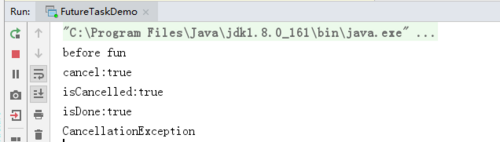
由于任务被取消,所以抛出CancellationException异常。注意的是,此时thread1线程还在跑,isCancelled和isDone返回的是true。cancel并不能让任务真正的结束。
正文到此结束
热门推荐








相关文章

近期评论
-
https://www.newcmy.com/register?aff=HBVX
建议您试试草莓云机场,可以流畅观看youtube和tiktok,上reddit/x也没有问题,还有各种ai优化节点。 -
出现OpenClaw "device signature expired"。the Gateway rejects if Math.abs(Date.now() - signedAt) > 10 * 60 * 1000 (10 minutes)
-
-
想购买您这个站,我的联系方式QQ741756694微信同步 能卖联系
-
-
-
-
-
https://www.liuhaihua.cn/archives/40657.html 这篇博客中的图片打不开了
-
不会英语啊。
Loading...
![[HBLOG]公众号](https://www.liuhaihua.cn/img/qrcode_gzh.jpg)